
EXPERIENCE TABLES
EXPERIENCE TABLES I “Influencers: Bringing Occupational Therapy Closer to the World”
Content to be addressed: The aim of this experience panel is for each participant to share their personal and professional journey, explaining what motivated them to start using social media and the purpose behind it. The discussion will also explore the positive aspects that an occupational therapist can convey through social media, as well as the challenges or less favorable aspects they have encountered in this field. Ultimately, the goal is for each speaker to share their experiences and learning within the digital environment.
Speakers:
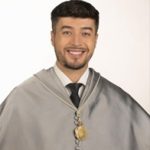
Pedro Centeno
Occupational Therapy student and Higher Technician in Social and Sports Animation and Teaching. Through social media content, shares reflections on health, well-being, and Occupational Therapy, working to eliminate myths while promoting inclusion and confidence in each person’s abilities.

Sara Pascual
Occupational therapist and associate lecturer in the Occupational Therapy degree program at the Complutense University of Madrid. Specialist in aquatic therapy, neurorehabilitation, and hand therapy, with more than 13 years of experience in different neurorehabilitation centers and aquatic therapy with both adult and pediatric populations.
She manages her own service in Madrid, “terapiaocupacionalacuatica”, as well as a private intervention service for individuals with and without disabilities. She provides training for occupational therapists and other healthcare professionals and offers consultancy services to centers and professionals.
She is Vice-President of the Wai Association, created to promote awareness among the public and authorities about the benefits of aquatic environments for people with and without disabilities, and to develop accessible aquatic projects using community resources, aiming to foster participation and improve quality of life.
She regularly delivers seminars, training courses, conference presentations, and master’s-level lectures related to aquatic therapy and neurorehabilitation.
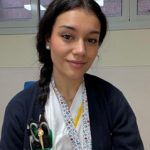
Elisa Castelao
Occupational therapist and PhD candidate at the Complutense University of Madrid. Her research focuses on occupational performance and quality of life in women with breast cancer, analyzing the functional and cognitive impact of oncological treatments from an interdisciplinary perspective.
She holds postgraduate training in neurology and clinical experience in neurorehabilitation and early intervention, developing evidence-based interventions aimed at promoting participation and autonomy.
She combines clinical practice with research, integrating professional practice and academic rigor. In 2026, she will publish as an author in the American Journal of Occupational Therapy a study on Occupational Therapy intervention for chemotherapy-related cognitive impairment.
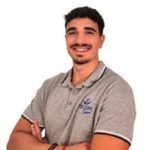
Jorge Clavijo
Occupational therapist, lecturer, and researcher holding an FPU scholarship at the Faculty of Health Sciences of the University of Málaga. His research activity focuses on driving performance assessment in older adults.
His teaching activity is centered on neurological rehabilitation and occupational assessment. He has participated in several national and international research projects and is the author of scientific publications in rehabilitation and functional assessment.
He currently combines university teaching with applied research and science communication through the podcast “Hablando de TO.”
EXPERIENCE TABLES II “Researching in Chilhood and Adolescence”
Childhood and Sensory Processing: A Cross-Sectional Study — The InProS Project (Childhood and Sensory Processing)
Speaker: Rocio Muñoz Sánchez

Rocío Muñoz Sánchez
Rocío Muñoz Sánchez holds a degree in Occupational Therapy and a Master’s degree in Neurological Occupational Therapy as well as a Master’s degree in Public Health from Miguel Hernández University of Elche.
She is currently a PhD candidate in the Doctoral Program in Public Health and Medical and Surgical Sciences at the same university, developing her doctoral thesis titled “Parental factors and sensory reactivity in children aged 3 to 7 years: The InProS Study,” supervised by Desirée Valera-Gran and Miriam Hurtado Pomares.
She is a member of the InTeO Occupational Therapy Research Group, actively participating since 2021 in projects related to child and family health from an occupational and public health perspective. She holds a predoctoral research contract funded by the Vice-Rectorate for Research and Knowledge Transfer at Miguel Hernández University.
She completed a three-month international research stay at the Centre for Bone and Joint Health – Blizard Institute, Queen Mary University of London, under the supervision of Dr. Hortensia Gimeno, strengthening the international and methodological dimension of her doctoral work.
She is co-author of several scientific publications indexed in PubMed focusing on Occupational Therapy, public health, and child development.
Relationship Between Functional Capacity, Sensory Processing, and Sleep in Children with Autism Spectrum Disorder (CapaciTEA)
Speaker: Alicia Fernández Álvarez

Alicia Fernández Álvarez
Alicia Fernández Álvarez holds a degree in Occupational Therapy and a Master’s degree in Neurological Occupational Therapy from Miguel Hernández University of Elche.
She is currently a PhD candidate in the Doctoral Program in Public Health and Medical and Surgical Sciences at the same university, developing her thesis titled “Sleep, sensory processing, and quality of life in Spanish children aged 2 to 7 years with Autism Spectrum Disorder (ASD): Psychometric evaluation of the Sleep Disturbance Scale for Children (SDSC),” supervised by Paula Fernández Pires.
She began her research career collaborating in the InstrumenTO-PBE project through a Ministry of Education collaboration scholarship and a research initiation grant from the Vice-Rectorate for Research.
She has one scientific publication indexed in PubMed, in which she held preferred authorship as corresponding author.
Professionally, she has worked in neurorehabilitation and direct intervention with children, adolescents, and families, an area in which she has been working since 2024. She also engages in science communication through social media, especially Instagram (@holialii).
She continues ongoing professional development in Autism Spectrum Disorder, pediatrics, scientific skills, data analysis, aquatic therapy, basal stimulation, and sensory processing, and has completed Sensory Integration training at the University of Southern California.
Development of a 3D Printing Protocol in Early Intervention and Post-Early Intervention for the Creation of Personalized Assistive Devices
Speaker: Patricia Amorós García y Ana Igual Blasco
Patricia Amorós García
Patricia Amorós García holds a degree in Occupational Therapy and a Master’s degree in Neurological Occupational Therapy, with specialization in Early Intervention, feeding difficulties, and sensory integration.
She has more than ten years of clinical experience in Early Intervention. She currently works as an occupational therapist at Fundación Salud Infantil, where she carries out assessment, intervention, and follow-up of children with developmental needs, as well as guidance and support for their families.
She is responsible for and an active member of the International Development Cooperation Unit, a program focused on professional exchange through online and in-person training in different countries. Since 2019, she has participated in training initiatives and campaigns focused on designing, producing, and adapting assistive products in Senegal, Morocco, Peru, and Honduras.
She is part of the Neurodevelopment Research Center (CIN) research group and participates in the research and innovation project “Application of 3D Technology in Childhood (0–16 years),” focused on the design and use of 3D printing resources to improve children’s functionality and participation.
Ana Igual Blasco
Ana Igual Blasco is a pediatric physiotherapist and PhD graduate from the University of Murcia. She is currently a researcher at the Neurodevelopment Research Center of Fundación Salud Infantil, working within the Nebrija University – Fundación Salud Infantil – Fundación García Peralta Chair in Neurodevelopment, aimed at promoting applied research, innovation, and knowledge transfer in child development.
She has more than eleven years of clinical experience in Early Intervention and has held coordination roles as head of CDIAT-1 at Fundación Salud Infantil, leading interdisciplinary teams and family-centered intervention programs.
She is also a lecturer in the Early Intervention Master’s program at Universidad Antonio de Nebrija. Her professional career integrates clinical practice, applied research, and technological innovation, with a particular interest in implementing evidence-based solutions in Early Intervention services.
EXPERIENCE TABLES III “Intellectual Disability: Perspectives and Action from Occupational Therapy”
Content to be addressed: To share, from a close and experiential perspective, the personal and professional trajectories of occupational therapists working in the field of intellectual disability, analyzing their practice, their vision of the profession, and the challenges of the context, with the aim of identifying strengths, limitations, and opportunities for improvement in intervention.
Moderator: Iris Juárez
Speakers:


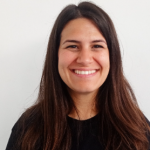
Soledad Zamora
Degree in Occupational Therapy, Master’s degree in Comprehensive Care for People with Intellectual Disabilities, and Master’s degree in Secondary Education Teaching. Additional training in support methodologies, deinstitutionalization, community development, and supported employment.
Professional experience as an occupational therapist in various services (residential facilities, day centers, and supported housing) for people with intellectual disabilities.
Community connector in the “Mi Casa” project of Plena Inclusión España, promoting community living for people with high support needs. Employment technician and job coach at Inserta Empleo (Fundación ONCE), working in training, job placement, and building partnerships with companies to promote inclusion.
Beatriz Juan
Diploma in Occupational Therapy (2002–2005) from Miguel Hernández University, with degree adaptation course completed in 2013–2014 at the same university. Completed various master’s degrees and postgraduate courses related to care for people with intellectual disabilities.
Cayetano Guillén
Diploma in Occupational Therapy (2003–2006) from Miguel Hernández University, with degree adaptation course completed in 2013–2014 at the same university. Completed several postgraduate courses related to intellectual disability, mental health, and behavioral disorders.
Marta Ramón
Diploma in Occupational Therapy from Miguel Hernández University since 2010. Throughout her professional career, she has worked in a private clinic and in an association specializing in care for children with Autism Spectrum Disorder (ASD), gaining experience in pediatric intervention and disability services.
She also worked independently providing home-based therapy for eight years to a child with Rett syndrome, delivering continuous and specialized therapeutic support.
In 2019, she completed Sensory Integration training delivered by Isabelle Beaudry, expanding her expertise in sensory-based Occupational Therapy approaches.
EXPERIENCE TABLES – IV “Occupational Therapy in Different Care Contexts for Older Adults: Shared Experiences”
Content to be addressed:To analyze and highlight the role of occupational therapy in different intervention settings — residential care, day centers, and home-based care — comparing their approaches, benefits, and limitations, in order to understand the breadth of professional practice and promote a critical and complementary perspective across contexts.
Moderator: Gema Moreno
Speakers:


Paula Sánchez
Occupational therapist with 23 years of experience in the public sector of the Generalitat Valenciana, working at IVASS (Valencian Institute of Social Services) with adults with intellectual disabilities.
She currently serves as Director of the Active Aging Center (CEA) in Crevillente, under the Department of Social Services, Family, and Childhood.
Alejandra Tati
Occupational therapist graduated from Miguel Hernández University, with more than 16 years of experience working in the field of older adults’ care. Currently, as Coordinator of Care and Humanization, she is responsible for implementing the person-centered care model in practice, promoting individualized and compassionate care in which each resident’s life history plays a key role in placing the person at the center of care.
She has specialized in gerontology and quality of life, dementia care and challenging behaviors, restraint-free care environments, and person-centered care approaches. She has participated in talks and conferences highlighting the importance of Occupational Therapy in long-term care facilities and in the management of people living with dementia.
She is also actively involved in social awareness and knowledge dissemination. Through Fundación Casaverde and the Casita Verde project, she promotes healthy lifestyle habits in schools, while also contributing to changing society’s perception of nursing homes by demonstrating that they can be spaces of well-being, autonomy, and person-centered support.
She considers teamwork and collaboration essential, as they enable more individualized care tailored to each resident’s needs. Her professional commitment is to continue contributing her experience to improve older adults’ quality of life and well-being.
She strongly believes in the importance of vocation in professional practice, understanding that work aligned with personal values and genuine concern for people’s well-being results in more compassionate, responsible, and high-quality care.
Eva Pau
My professional career has primarily focused on supporting people with disabilities in residential services and day centers. Over the past four years, my professional work has been mainly carried out in home-based care settings.